
Agritech & Genomics
Crop and livestock genomic analysis pipelines for breeding programs and trait discovery.

TYPICAL CLIENT
A head of breeding informatics or R&D lead at a seed, crop or livestock genetics company
Managing genomic and phenotypic data across many breeding generations, usually looking to shorten field-trial cycles with genomic selection.
The problems that bring teams to us.
Breeding data spread across incompatible systems
Genomic, phenotypic and field-trial data often live in separate systems that were never designed to talk to each other.
Field-trial cycles that take a full season to validate
Traditional breeding validation can take a year or more per cycle, slowing the pace of genetic gain.
Genomic selection models with data too sparse to trust
Building a reliable predictive model requires careful handling of small, unevenly sampled breeding populations.
Four places we plug into your program.
What each of these actually looks like day to day — not just the one-line version.
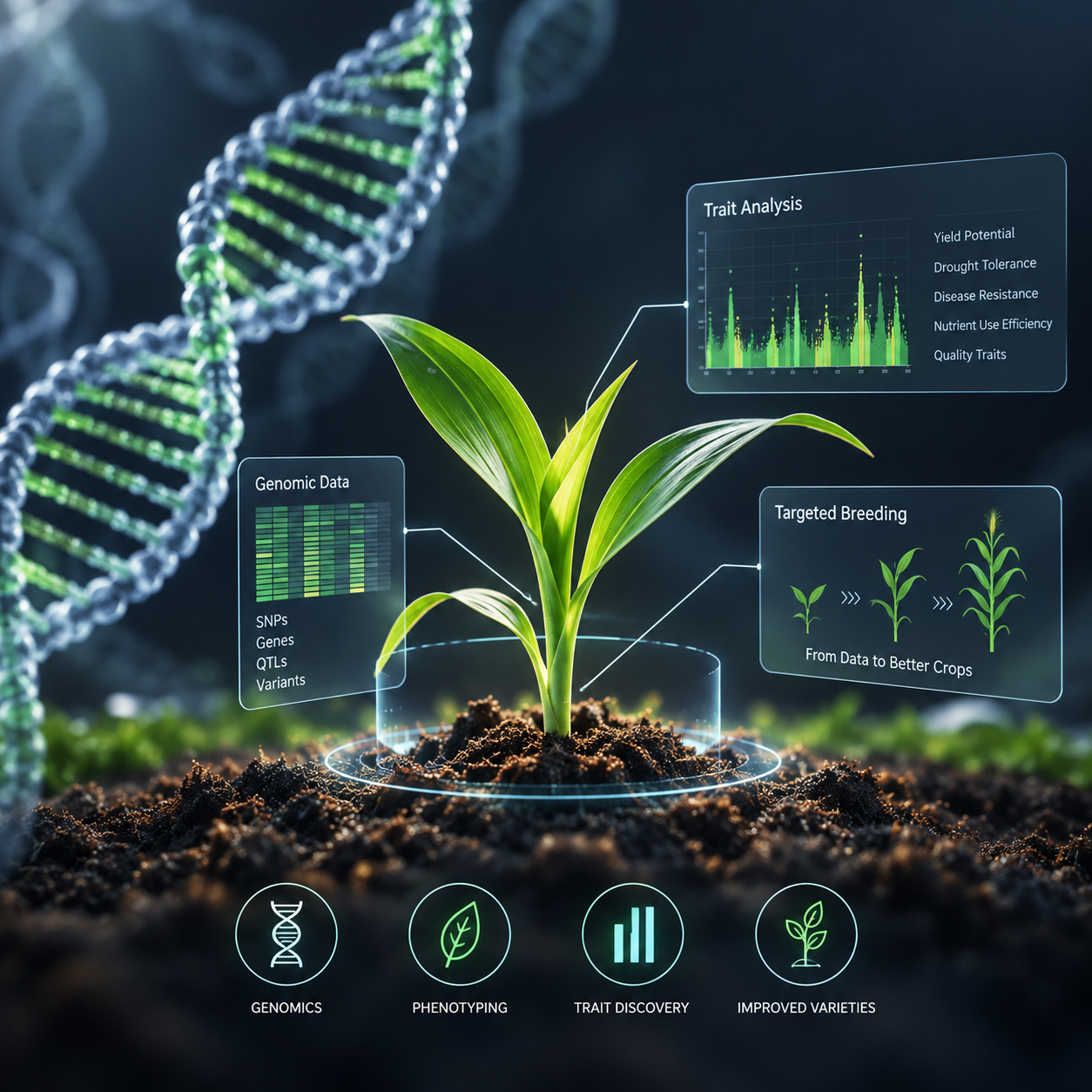
Trait discovery pipelines
Finding the genomic markers behind a yield, resilience or quality trait means linking sequencing data to phenotypic records across seasons and sites, which is where most breeding programs lose time to manual reconciliation. We build trait discovery pipelines that connect genomic and phenotypic data automatically, so your breeders spend time on selection decisions instead of spreadsheet cleanup.
- GWAS and QTL mapping pipelines tuned to your crop or livestock system
- Automated linkage between genomic, phenotypic and environmental datasets
- Marker validation workflows built for multi-season, multi-site trial data
Breeding program data platforms
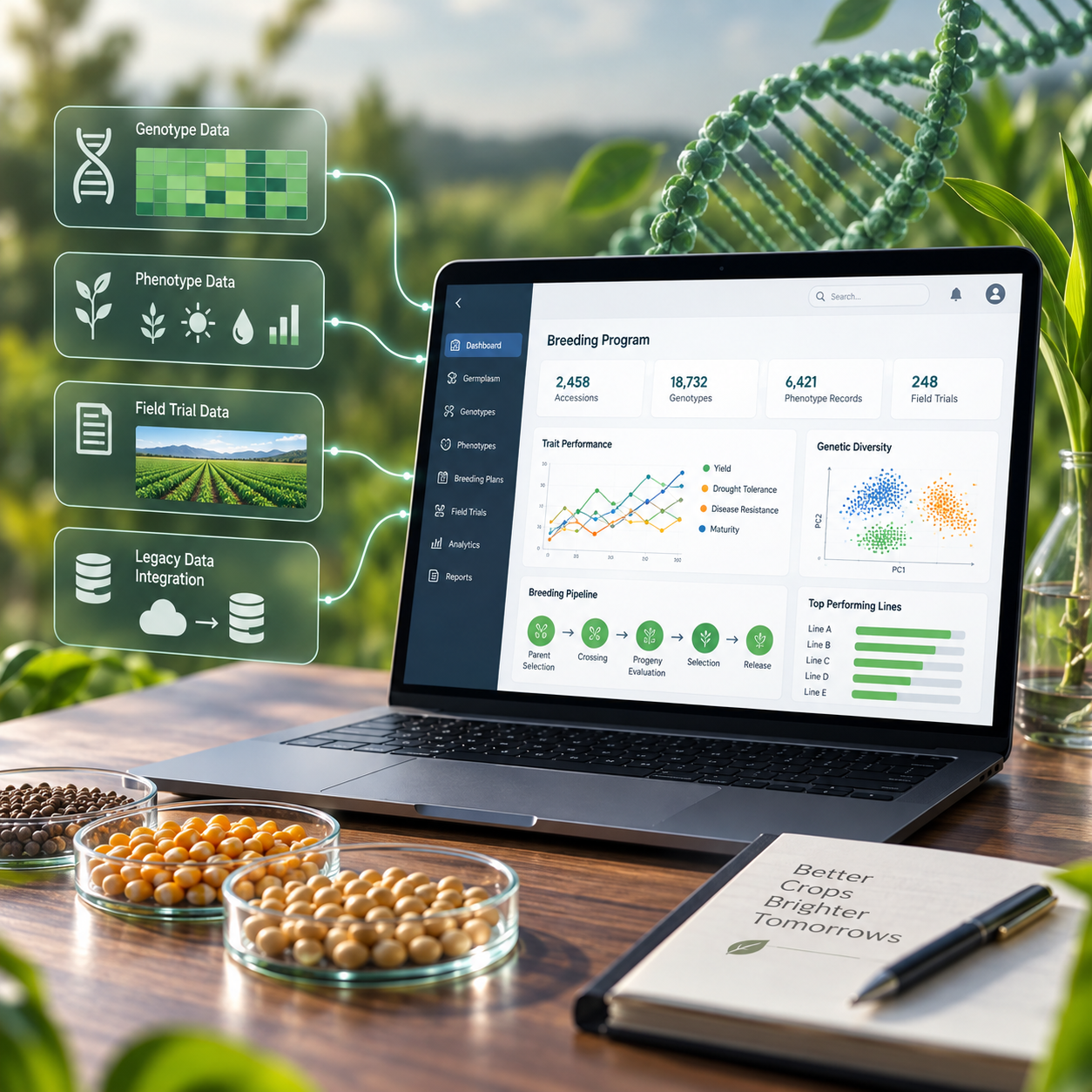
Multi-generation breeding data tends to accumulate across spreadsheets, lab systems and field-trial software that were never designed to talk to each other. We build a single queryable platform that unifies pedigree, genotype and phenotype records across generations, so a breeder can trace a line’s full history without stitching together exports.
- Unified pedigree, genotype and phenotype data model across generations
- Query tools built for breeders and geneticists, not just data engineers
- Migration from legacy spreadsheets and disconnected lab systems
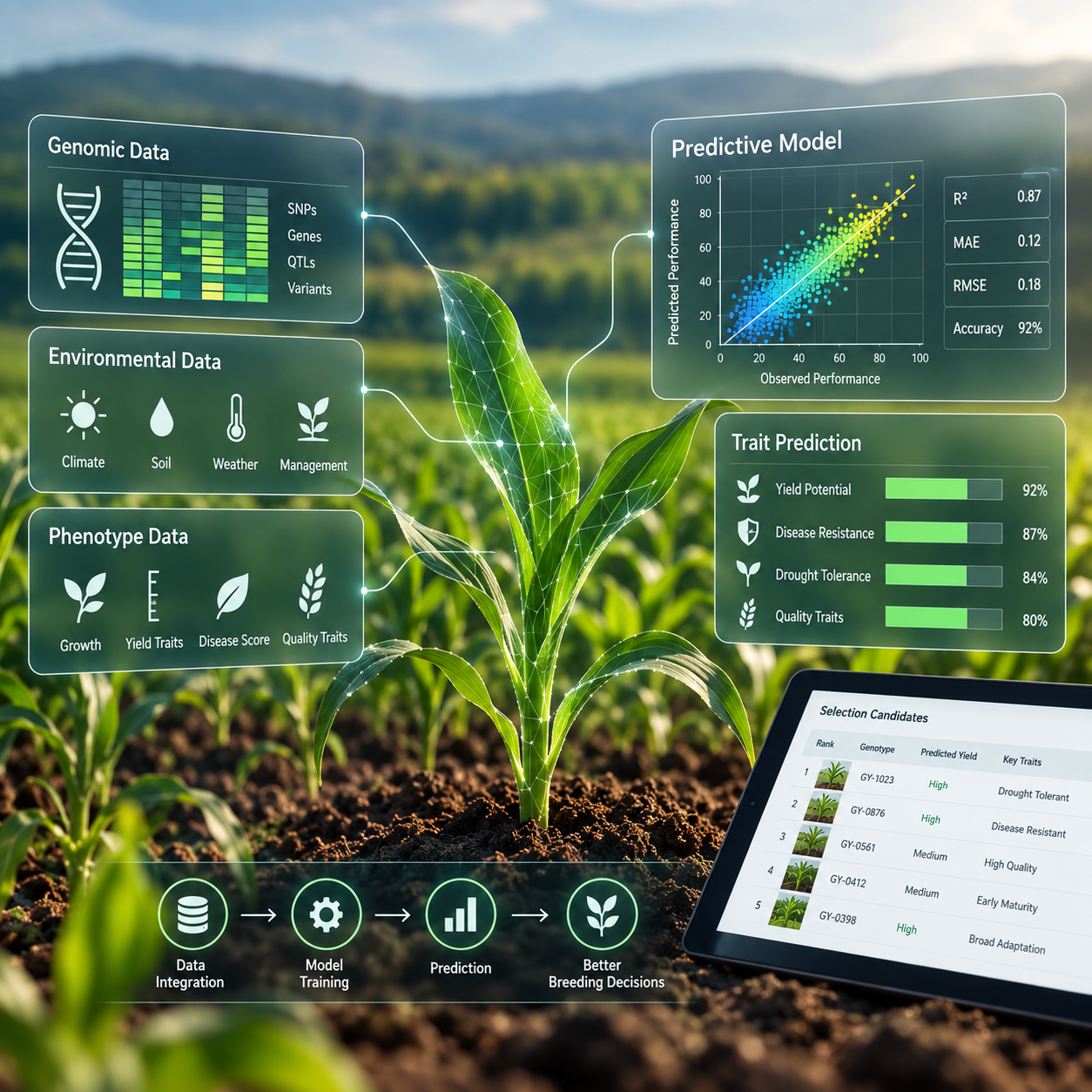
Predictive breeding models
A season of field trials is expensive and slow, and not every cross is worth planting out to find out. We build genomic selection models that predict trait performance from genotype data before a season begins, so breeding programs can prioritize the crosses most likely to perform.
- Genomic selection models trained on your program’s historical trial data
- Prediction accuracy benchmarked against realized field-trial outcomes
- Models retrained as each new season’s data comes in
Field & lab data integration
Field trial software, sequencing pipelines and phenotyping instruments each produce data in their own format, and reconciling them by hand is where breeding programs lose the most time. We build integration layers that pull field, lab and instrument data into one pipeline automatically, so results are ready to analyze as soon as they’re collected.
- Integration with common field-trial management and phenotyping platforms
- Automated ingestion from sequencing and genotyping instruments
- Standardized data formats across every source feeding the platform
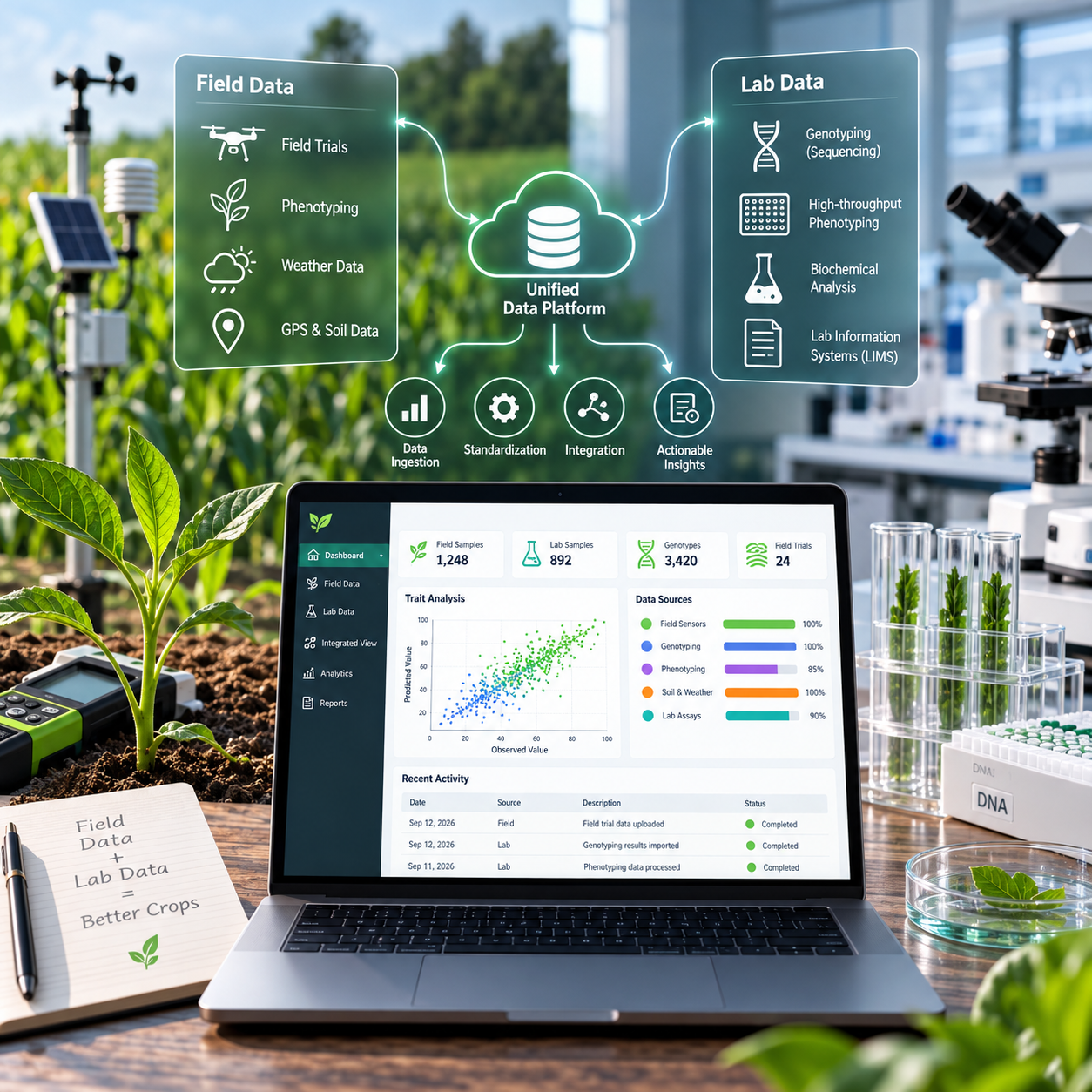
Genomic selection that shortens the breeding cycle.
A traditional breeding cycle can take years to confirm whether a cross produced the trait you wanted. Genomic selection models, built on well-harmonized data, let breeders make that call before the crop is even in the ground.
We bring the same pipeline rigor we apply to clinical genomics to agricultural genomics — because a breeding decision is just as consequential as a clinical one, on a different timescale.
How we approach this field
Four stages, shaped around how this industry actually operates.
Inventory breeding data
We map existing genomic, phenotypic and field trial data across breeding generations.
Harmonize across generations
Multi-generation data is unified into a single, queryable breeding data platform.
Build genomic selection models
Predictive models estimate trait performance from genomic data alone.
Integrate into breeding decisions
Predictions are delivered directly into the tools your breeding team already uses.
We’re making cross decisions in weeks that used to take an entire growing season to validate.
Before you reach out
Yes, our pipeline and modeling approach transfers across species, with the specific genomic architecture adapted to each.
Even a few generations of well-documented data is often enough for an initial model; we’ll assess data sufficiency during scoping.
Yes, integration with existing field-trial and phenotyping systems is a standard part of scoping this work.
Running a multi-generation breeding program?
Tell us about your current data and trial cycle — we’ll map where genomic selection could help.