
Proof, not promises.
A federated data consortium, a discovery-to-IND program, a diagnostics platform, an outbreak response, a breeding program and a Series B raise. Here’s exactly what we did and what it produced.
Every case study below reflects a real engagement.
Client identities are withheld where required by NDA. Challenges, approaches, and outcomes are presented as accurately as permitted.
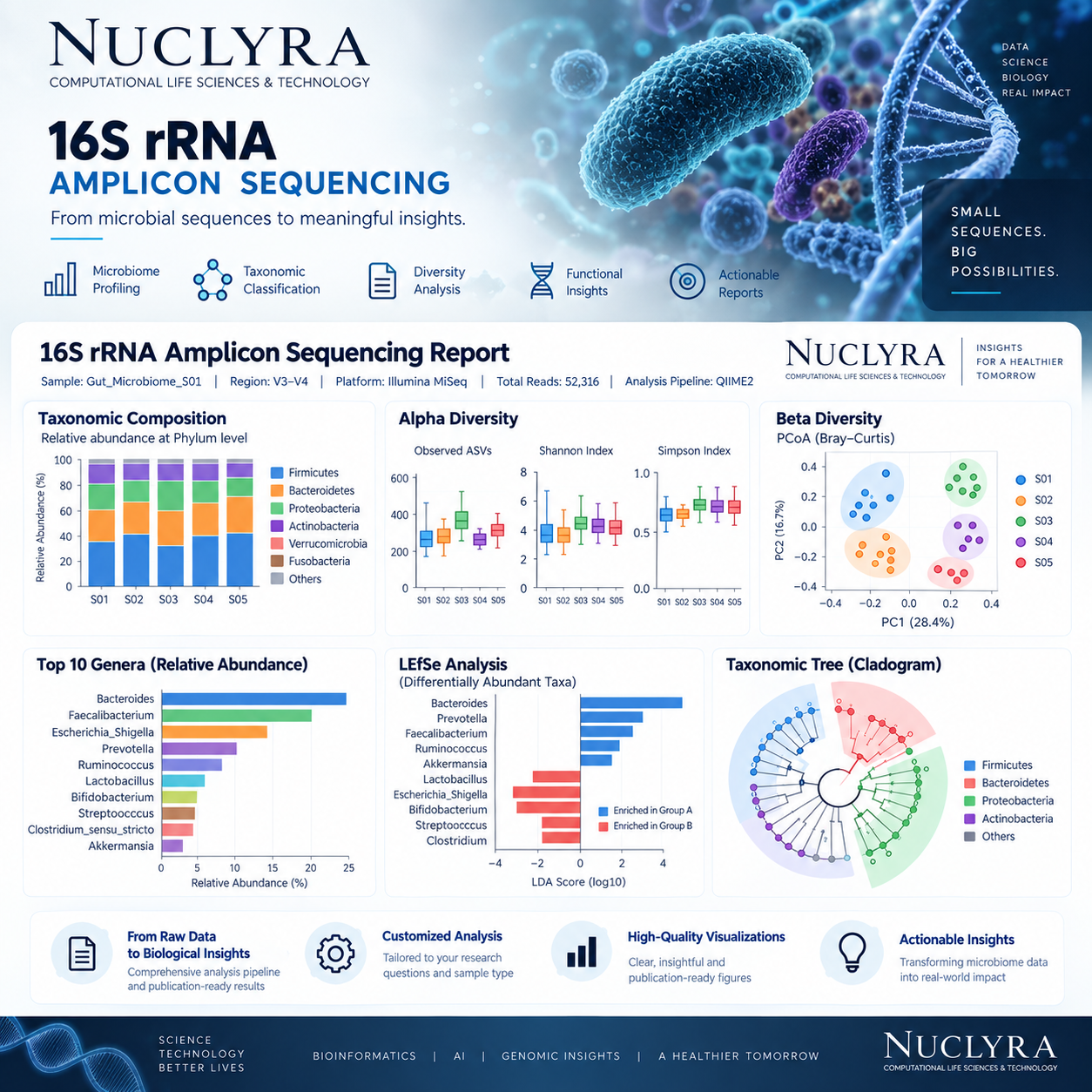
Nextflow-based engineering of a custom 16S metagenomics analysis and reporting pipeline
The project involved optimizing and customizing the nf-core/ampliseq workflow for automated 16S amplicon sequencing analysis and comprehensive reporting. The workflow was enhanced to generate structured outputs, customized visualizations, and client-ready microbiome reports, integrating Nextflow workflow automation, reproducible analysis, and customized reporting.
The primary challenge was adapting standardized nf-core/ampliseq outputs to meet specific reporting and visualization requirements. Managing multiple analytical outputs while maintaining workflow reproducibility and consistency also required careful customization.
We optimized the existing workflow using Nextflow-based modular customization while retaining the core nf-core/ampliseq framework. Customized processing, visualization, and reporting components were integrated to automate result generation and produce clear, consistent, and scalable 16S metagenomics reports.
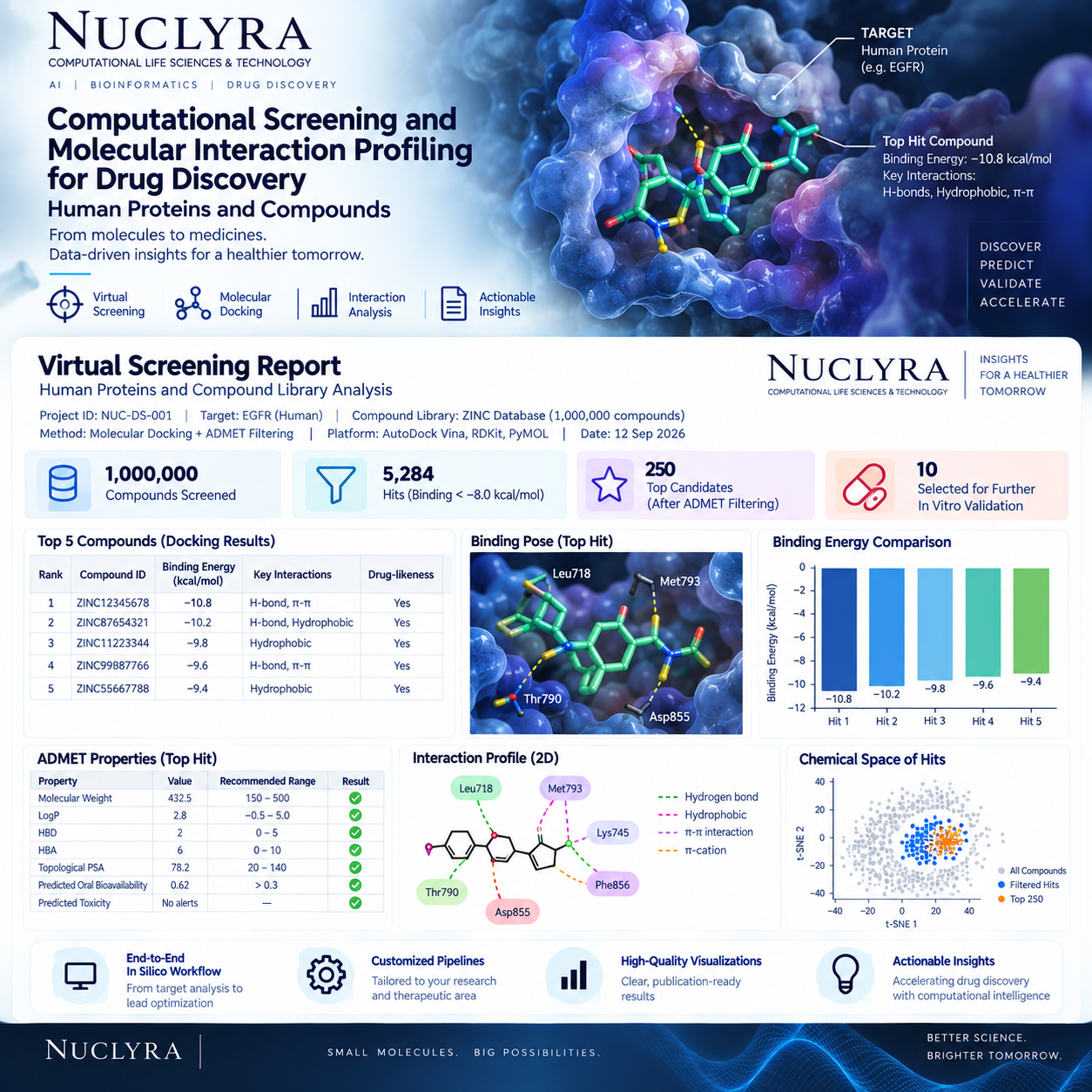
Computational screening and molecular interaction profiling for drug discovery
The project focused on computational screening and molecular interaction profiling to evaluate potential therapeutic candidates against selected protein targets. Molecular docking was performed to investigate ligand–protein binding affinity and identify promising interactions. The analysis integrated molecular docking, binding-energy evaluation, and structural interaction profiling to support lead identification.
A key challenge was systematically evaluating multiple ligand–protein combinations while maintaining consistent docking parameters and reliable comparison of binding results. Interpreting docking scores alongside specific molecular interactions was also essential for distinguishing promising candidates from weaker binders.
We implemented a structured in-silico screening workflow involving protein and ligand preparation, molecular docking, binding-affinity assessment, and post-docking interaction analysis. Docking results were comparatively evaluated to identify favorable ligand–protein interactions, followed by structural visualization and characterization of key binding interactions. This approach enabled systematic prioritization of potential therapeutic candidates for further investigation.
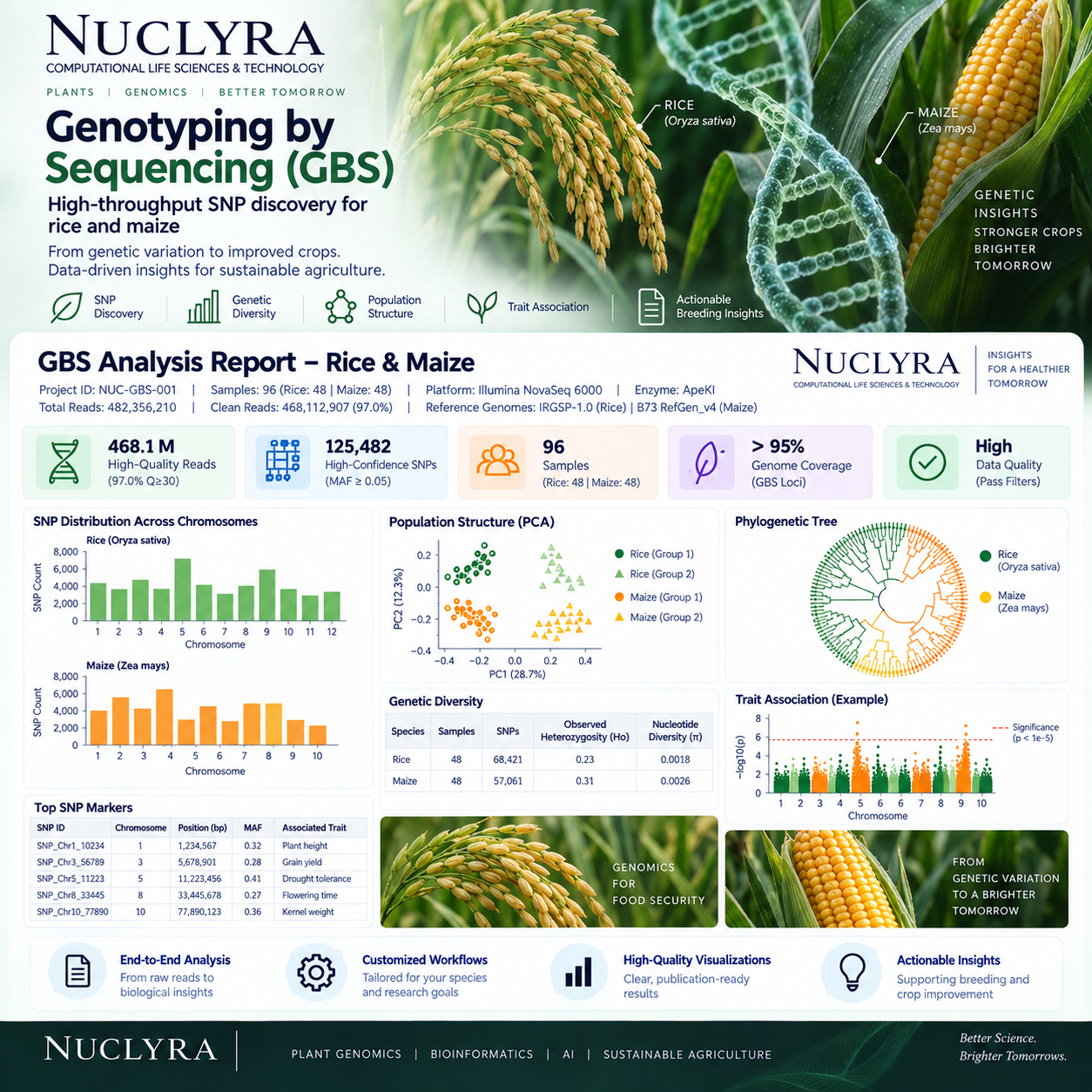
Nextflow-based GBS data analysis and genomic variant profiling in rice and maize
The project focused on developing a Nextflow-based Genotyping-by-Sequencing (GBS) workflow for rice and maize genomic datasets. The workflow was designed to automate sequence processing, quality control, alignment, variant identification, and downstream genotyping analysis. The analysis integrated NGS workflow automation, genomic variant discovery, and crop-specific genomic profiling.
A key challenge was efficiently processing GBS datasets from different crop species while maintaining consistent quality control and reliable variant detection. Handling sequencing variability, filtering low-quality reads and variants, and generating standardized outputs across rice and maize datasets required a reproducible and scalable workflow.
We implemented a modular Nextflow-based GBS analysis workflow covering raw-read quality assessment, preprocessing, reference-based alignment, variant identification, filtering, and genomic profiling. The workflow was structured to support automated and reproducible processing of rice and maize datasets while maintaining consistency across samples. This approach enabled efficient SNP discovery, genotyping, and downstream genomic analysis for crop genomics applications.
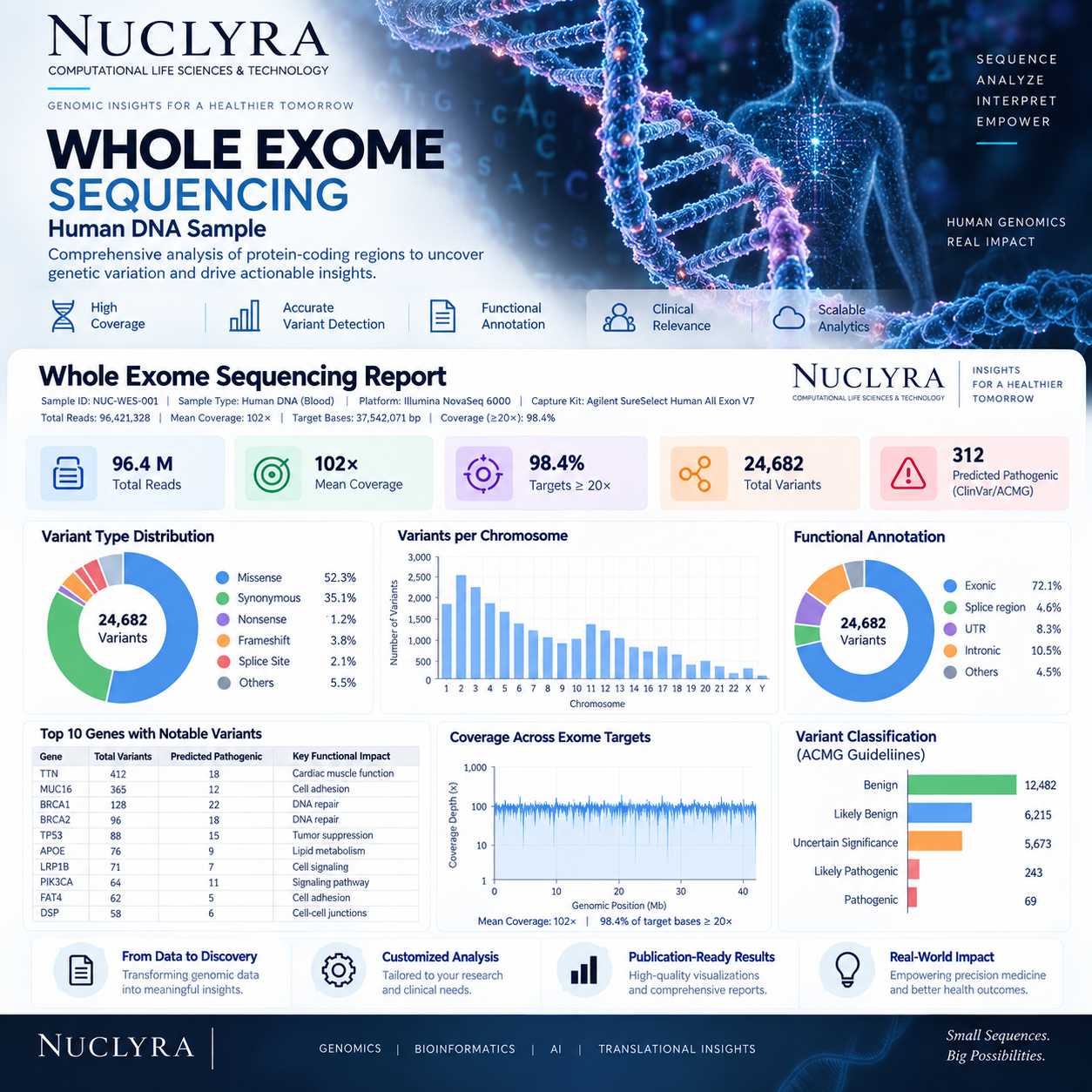
Integrated whole exome sequencing analysis and variant annotation
The project focused on integrated whole exome sequencing (WES) analysis and variant annotation to identify and characterize genomic variants from exome sequencing data. The workflow covered read quality assessment, alignment, variant calling, filtering, and functional annotation. The analysis integrated variant discovery, population databases, clinical annotations, and functional impact assessment to support genomic interpretation.
A key challenge was processing large-scale WES datasets while maintaining high-quality alignment, reliable variant detection, and consistent filtering across samples. Interpreting the large number of identified variants and prioritizing potentially relevant variants using population frequency, clinical significance, and functional annotations also required systematic analysis.
We implemented an end-to-end WES bioinformatics workflow covering raw-read quality control, preprocessing, reference alignment, BAM processing, variant calling, variant quality assessment, and annotation. Identified variants were annotated using resources such as ClinVar, gnomAD, and functional prediction databases to assess clinical relevance, population frequency, and potential functional impact. This approach enabled systematic variant prioritization and comprehensive interpretation of WES data.
Every one of these started the same way — someone sent us a dataset and a deadline. The rest is just doing the work properly.
Ready to see your name on this list?
Tell us about your data and your deadline — we’ll tell you honestly what it would take.